Period myths and facts
Period Myths and Facts aims to dispell all of the anxiety created by the sheer volume of false information online. Each month, women and girls of menstruating age have a period (menstrual bleed). Your first period is called the ‘menarche’ whilst your last period is called your ‘menopause’.
Fact: Women have 400 periods on average in their lifetime.
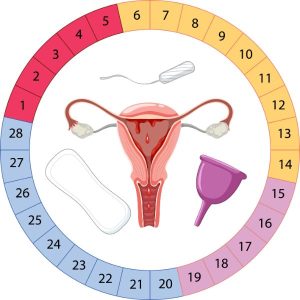
Basic facts about your menstrual cycle
Menstruation phase: Day 1 of bleeding
The lining of your uterus or womb is shedding as there has been no fertilised egg implanted to start a pregnancy. Bleeding is normally heaviest on this day.
Period bleeding normally lasts for 5-7days. Levels of oestrogen and progesterone are both low at this point in the cycle.
Your period is another line of elimination alongside stools, urine and sweat. Energy levels are low.
Follicular phase: Day 7-14:
Oestrogen levels rise as do energy levels. This is the non-bleeding part of the follicular phase.
Ovulatory phase: Day 14: (for a 28 cycle*)
This is when oestrogen levels peak and the best egg is chosen by the body and released from its follicle on the ovary.
Several other eggs line in wait in their follicles but only 1 is chosen to be released. The other eggs are then destroyed. This egg travels down the fallopian tube into the womb ready to be fertilised.
Some women can have ovulation pains or even spotting of blood. Most women have a lot of energy mentally and physically at this time, as well as a higher libido.
Egg white vaginal discharge is a sign of ovulation as is a slight rise in basal body temperature. Your cervix is also softer and higher at this point in your cycle as this makes it easier for the sperm to fertilise the egg.
This is important if you are trying to conceive and want to know when and if you are ovulating.
A women’s fertile ‘window’ is 6 days due to sperm being able to survive for up to 7 days. The egg is only viable for 24hrs.
*Ovulation occurs 14 days prior to your next period. For a 24 day cycle this is day 10. For a 32 day cycle this is day 18.
This is relevant if you are using the natural rhythm method of contraception or if you are trying to conceive. 28 day cycles are an ‘average’. Most women’s cycles vary from month to month, but 1 period per calendar month is the most common.
Luteal phase: Day 15-21:
This is when oestrogen levels fall sharply and progesterone starts to rise.
Day 21-28:
Progesterone rises to a peak at Day 28.
Pre-menstrual tension/symptoms (PMT/PMS) can occur at this point such as bloating, irritability, weepiness, anger, clumsiness, sore heavy tender breasts, facial break outs, craving chocolate, low energy, and low mood.
It is worth noting that our hunter-gatherer ancestors didn’t have PMT!
Periods and stigma
Periods are still stigmatised to this day! I’m Hindu and am not ‘allowed’ to enter a temple to pray or consume holy food whilst on my period.
TV adverts still use ‘blue saline’ liquid to demonstrate the absorbency of menstrual products. There are girls and women around the world who don’t have access to menstrual products when they need them. The language needs to change, too.
Why are they called feminine hygiene products? Or sanitary pads?
VAT was added to these products until January 2021. VAT is usually added to extravagant or luxury items. I don’t think any woman would call these luxury items!
95% of women have painful periods. 25% miss work/school EVERY month!
Stress and inflammation affect periods
Some women experience migraines or tension headaches alongside their period. Some have large clots or painful menstrual cramps. These could all be signs of generalised inflammation throughout the body. High blood sugar and high insulin levels also indicate inflammation.
Stress can raise both insulin and blood sugar levels. This leads to lower levels of anti-inflammatory prostaglandins. These are chemical messengers or hormone-like substances that deal with injury and infection by helping the blood to clot quickly and contracting muscles to stem bleeding. What has this got to do with periods?
These two actions are brilliant at keeping you alive if you were fighting a sabre-tooth tiger! However, when there is no injury, but you are stressed, the body translates this into large blood clots from your uterine lining and painful menstrual cramps.
Prostaglandins are the main pathway for NSAIDs drugs like ibuprofen or naproxen to work. Hence these painkillers are better for period pain than paracetamol or codeine. However, ibuprofen has side effects such as increased bleeding, nausea, vomiting, diarrhoea, etc. Ibuprofen can also trigger asthma attacks.
Paracetamol robs the body of glutathione, which is the body’s chief antioxidant. This protects the liver from environmental damage and inflammation. In Chinese medicine, your liver controls menstruation and menopause. Your liver performs over 500 functions in your body daily.
Teenagers and periods
When teenagers start their periods, it can take 5-7yrs for them to settle into a regular routine. This can easily be misdiagnosed as PCOS, infertility or other menstrual issue especially if the bleeding is heavy or there are ‘missed’ periods.
The endocrine (hormonal) system is still getting its bearings and endocrine disruptors are ubiquitous! Add this to the stress caused by exams or relationship issues and its easy to see the allure of the contraceptive pill as a quick ‘fix’.
Controlling or fixing your periods whilst giving effective contraception as well. However, these are synthetic hormones, not your own natural hormones and do have short, medium and long term side effects.
Other drugs that can affect your natural menstrual cycle are steroids (inhaled, oral and creams), antipsychotics, chemotherapy and antibiotics.

How insulin and cortisol are the King and Queen
There are 3 levels of hormones which all contribute to oestrogen, progesterone and testosterone being made in your body. The top level of these hormones is populated by insulin and cortisol. Stress increases cortisol levels AND insulin levels. Hence why stress can really affect your menstrual cycle as well as your systemic inflammation levels.
Stress switches off your digestion and fertility. This makes sense in the context of running away from or fighting a sabre toothed tiger for about 10mins. This is not the time to be digesting that meal you just ate or to make a baby. However, long term low level stress can cause PCOS, fibroids, migraines, depression, anxiety, acne, PMT and endometriosis.
What is period blood and why does it matter?
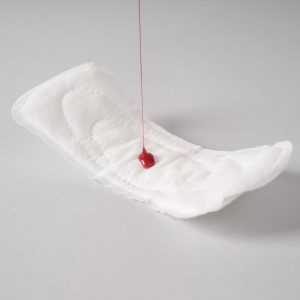
Period blood should be a dark red colour turning to bright red as the flow gets going. Any brownish blood is ‘old’ blood and is referred to as stagnation in Chinese medicine. Period blood consistency should be like runny honey. Flow should be heavy, moving to medium and then finally light as the period progresses.
It is worth noting that before 2023, manufacturers of pads and tampons used saline (salt) water to test absorbency of their products! Mid-cycle spotting is generally not a good sign as this can indicate an undiagnosed STI. However as mentioned above, this can also be as a result of an implantation bleed or ovulation.
Period blood is a mixture of tissue, uterine lining, clots, red blood cells and other fluids. Your period is an early warning system. It is a sign of your health just like your blood pressure or body temperature. If your periods are not regular, very painful or flooding then this could be a sign of serious health issues such as pelvic floor issues, endometriosis, or systemic inflammation.
Heavy periods can indicate fibroids, adenomyosis, or hypothyroidism.
Missing periods (amenorrhoea) can indicate not making enough oestrogen and progesterone, possibly due to high levels of insulin and cortisol.
What questions do I ask about periods during my consultations and why?
I always ask my female clients about these properties of their cycle:
- Colour of period blood
- Size and quantity of any clots
- Cycle length ( day 1 of bleeding to the next day 1 of bleeding)
- How many days she bleeds for
- PMT symptoms including any painful menstrual cramps during bleeding
If you are suffering with painful menstrual cramps or any other symptom please do book in a discovery call to see how I can help you!