Ear infections and treatments
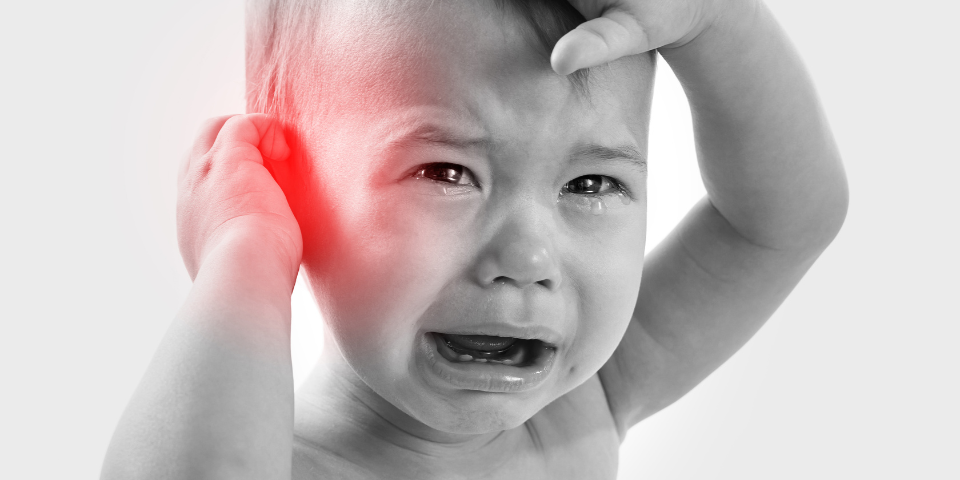
Ear infections can be extremely painful, especially for children. They are more common in children and young babies as the Eustachian tube is predominantly horizontal. This means it is more prone to mucus or fluid buildup from the common cold.
20% of UK adults have suffered from an ear infection, although this rate is rising, especially after Dec 2016, when the Apple AirPod ™ in-ear headphones were launched.
According to Specsavers, 80% of children will get an ear infection before their third birthday, and the NHS states that 80% of children will experience glue ear (otitis media with effusion) before the age of four.
Symptoms include pus oozing from the outer ear, pain and/or throbbing inside the ear, fever, feeling of pressure inside the ear, difficulty hearing or muffled hearing, red hot outer ear etc. Babies with an ear infection may also: rub or pull their ear, not react to some sounds, be irritable or restless, be off their food, or keep losing their balance.
Conventional treatment is painkillers and antibiotics, which take 48 hours to start working.
Homeopathic remedies are Belladonna, Chamomilla and Pulsatilla.
The ears are the opening to the Kidney energy in Chinese medicine. Kidney energy is also linked with adrenal glands and hence anxiety.
How Does This Affect Surgery & The NHS Burden
Approximately 90,000 grommet operations are performed in England and Wales every year for glue ear, at an estimated cost of £30 million annually.
Source: Primary Care Notebook
A UK-wide GP database study of over 2.26 million patients recorded 322,108 acute otitis media (AOM) consultation events and 63,808 glue ear events over a 10-year period.
Source: British Journal of General Practice (2006)
Glue Ear (Otitis Media with Effusion)
Glue ear is a common condition where the middle ear — the space behind the eardrum — fills with a thick, sticky fluid, giving the condition its name. It occurs when the Eustachian tube, which connects the middle ear to the back of the throat and is responsible for draining fluid and regulating pressure, becomes blocked or swollen. When this tube isn’t functioning properly, fluid builds up in the middle ear rather than draining away naturally.
How common is it?
Glue ear is one of the most common childhood conditions in the UK. Around 8 in 10 children will be affected by it at some point before the age of four. It is less common in adults, but it can occur at any age.
What causes it?
The Eustachian tube can become blocked for a number of reasons. In children, the tube is shorter and more horizontal than in adults, making it more prone to blockage. Common contributing factors include:
- Frequent colds or upper respiratory infections, which cause inflammation in the tube
- Enlarged adenoids, which can physically obstruct the tube’s opening
- Allergies, which can cause persistent swelling in the surrounding tissue
- Passive exposure to cigarette smoke, which is known to increase the risk
- Attending nursery or school, where exposure to infections is higher
Symptoms
The most common symptom of glue ear is temporary hearing loss, which can affect one or both ears. Because the fluid dampens the movement of the eardrum and the tiny bones of the middle ear, sounds can seem muffled or distant. In children, this can sometimes be mistaken for inattentiveness or behavioural issues.
Other symptoms may include:
- Earache or a feeling of pressure or fullness in the ear
- Hearing sounds like ringing or buzzing (tinnitus)
- Problems with balance or coordination, as the ear plays a key role in the body’s sense of balance
- Delayed speech and language development in young children
- Difficulty concentrating, particularly in noisy environments like classrooms
Why it matters in children
If glue ear persists over a long period, it can have a meaningful impact on a child’s development. Hearing is fundamental to language learning, and even a mild or fluctuating hearing loss during critical developmental years can affect speech, communication, and progress at school. It is important to seek advice from a GP if you notice any signs of hearing difficulty in a child.
Glue Ear Diagnosis
A GP can usually diagnose glue ear by examining the ear with an instrument called an otoscope. In some cases, a hearing test or a test called tympanometry, which measures how well the eardrum is moving, may be carried out to confirm the diagnosis.
Conventional Treatment
In most cases, glue ear resolves on its own within three months, which is why conventional medicine often takes a “watchful waiting” approach initially. However, where it persists, or where hearing loss is significantly affecting a child’s development, further intervention may be recommended.
The most common surgical treatment is the insertion of grommets (also called tympanostomy tubes). These are tiny plastic tubes inserted into the eardrum under a short general anaesthetic. They help to ventilate the middle ear and allow fluid to drain away, restoring hearing in the process. Grommets typically fall out on their own after around 6 to 12 months as the eardrum gradually pushes them out. Around 90,000 grommet operations are performed in England and Wales every year, making it one of the most common surgical procedures carried out on children.
In some cases, the removal of enlarged adenoids may be recommended at the same time, particularly if they are thought to be contributing to the blockage.
The Homeopathic Solution:
Glue ear can be treated with Homeopathy using remedies such as Kali mur, silica, and merc viv. It’s best to speak to a homeopath to individualise the treatment. Glue ear (as with other ear-related things) may also be a sign of a kidney energy blockage.
Perforated Eardrum (Tympanic Membrane Perforation)
Most people have experienced that awful moment on a plane when their ears just won’t pop. For some, that pressure doesn’t just cause discomfort; it can actually tear the eardrum. A perforated eardrum is exactly what it sounds like: a hole or tear in the thin membrane that separates your outer ear from the middle ear.
It’s more common than people realise, and the causes are pretty varied. Ear infections are among the biggest culprits.
When fluid or pus builds up behind the eardrum and the pressure gets too great, it can rupture. Interestingly, when this happens, it often brings a sudden sense of relief as the pressure releases, though that’s quickly followed by discharge from the ear. Not pleasant, but the pain does ease.
Other causes include a sudden loud bang or explosion close to the ear, a physical injury, like someone slapping the side of your head or, yes, poking something into your ear canal, and pressure changes from flying or scuba diving. In young children, foreign objects in the ear are surprisingly common, too.
Symptoms
Pain is often the first sign, sometimes sharp and sudden. After that, people typically notice some degree of hearing loss, which depends on the size of the tear.
There may be fluid, blood or pus draining from the ear, a ringing or buzzing sensation, and sometimes dizziness. A temperature can develop if infection is involved.
One thing worth knowing: the symptoms can look a lot like a standard ear infection, so don’t try to self-diagnose. See a GP.
What happens next?
The good news is that most perforated eardrums heal on their own within about two months, and hearing usually returns to normal once they do. While it’s healing, keeping the ear dry is really important; water getting into the middle ear through the perforation is a fast track to infection.
That means no swimming, and being careful in the shower too.
A GP may prescribe antibiotic drops if there’s an infection alongside the perforation, and will keep an eye on how healing is progressing.
In cases where the eardrum doesn’t close on its own, which is more likely with larger tears, a procedure called a myringoplasty can patch it up using a small piece of tissue, usually taken from just behind the ear.
It has a very good success rate. When there’s also damage to the tiny bones in the middle ear, a more involved procedure called a tympanoplasty may be needed, though this is less common.
When to see a GP
If you suspect a perforated eardrum, especially if you have discharge coming from the ear or your hearing has noticeably changed, get it checked. Don’t put it off,and don’t put anything in the ear in the meantime.
The Homeopathic Solution:
A perforated Eardrum could potentially be treated with Calendula, Morgan B, and Merc D remedies, but a consultation with your homeopath is the recommended first step. Just like seeing your doctor.
Earwax and Ear Infections – What’s the Connection?
Earwax gets a bad press, but it’s actually there for good reason. It’s your ear’s built-in defence system, trapping dust, dirt and bacteria before they can cause any trouble deeper in the ear canal. For most people, it manages itself perfectly well without any intervention.
The problem is that for some of us, wax builds up faster than the ear can clear it, and that’s when things can start to go wrong. About 5% of UK adults need their ears professionally cleaned at some point. Since May 2022, this is no longer available on the NHS, so most people have to go private or visit a pharmacist.
If you regularly use in-ear headphones, hearing aids, or earplugs, you’re more likely to experience buildup; these interfere with the ear’s natural self-cleaning process and can push wax deeper. Cotton buds are another culprit, even though most of us reach for them instinctively. They tend to compact the wax rather than remove it.
So what does this have to do with ear infections? Quite a lot, actually. Impacted wax creates a warm, moist environment that bacteria love. It can also trap water in the ear after swimming or showering, stopping it from draining — a setup that’s practically an open invitation for infection. You might know this as “swimmer’s ear.” On the flip side, an active ear infection can actually cause the ear to produce more wax as part of its immune response, so the two often go hand in hand.
The symptoms of a wax blockage, muffled hearing, a blocked or full feeling, earache, and tinnitus overlap quite a bit with those of an ear infection, so it’s always worth getting checked out rather than assuming you know which one you’re dealing with.
If wax is the issue, over-the-counter softening drops from a pharmacist are usually the first port of call. For more stubborn blockages, microsuction or ear irrigation done by a professional is the safest option. And it’s worth resisting the urge to poke anything in there yourself — it almost always makes things worse.
The Homeopathic Solution:
Ear Wax and Ear Infections can be treated with Causticum, Conium or Lachesis remedies, but a consultation with your homeopath is the recommended first step. Book a consult with me if you or you’re children are experiencing any Ear Infection symptoms and lets get you back on the road to good health.